

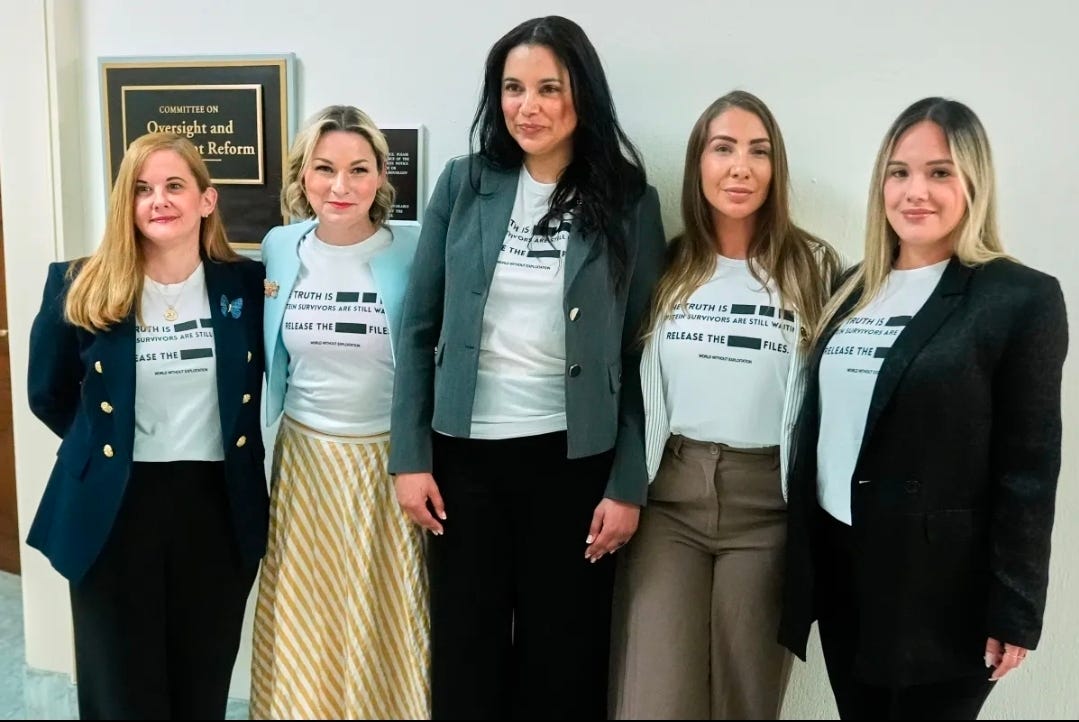
For nearly a year, survivors of Jeffrey Epstein’s abuse and a growing public demand for accountability have pushed Congress into an investigation that has, at times, cut across party lines. Lawmakers have interviewed some of the most powerful people ever pulled into a congressional inquiry tied to Epstein, including a former president, former Cabinet officials, financial figures, lawyers, and people who had direct proximity to Epstein’s world. Yet the central failure remains intact. Survivors have been asked to revisit trauma, the public has been told to wait for process, and Washington still has not produced a full accounting of who was protected, what the government failed to do, and why no broader chain of accountability has followed.
The latest flashpoint came after Pam Bondi, President Donald Trump’s former attorney general, sat for a transcribed interview connected to the Trump administration’s handling of Epstein materials. Lawmakers had hoped her testimony would answer questions about the chaotic release of files, the administration’s decisions around what was made public, and the wider refusal to provide a full record. Instead, Democrats left the interview furious, accusing Bondi of defending the administration’s handling of the material and refusing to answer questions about Trump’s involvement. That matters because the Epstein files are not just documents. They are part of a record survivors have been forced to fight for while the powerful continue to claim ignorance, dodge responsibility, or narrow the scope of what the public is allowed to know.
The survivor harm in this story is not abstract. Several survivors traveled to Washington to confront Bondi and demand acknowledgment from the government that failed them. They have already endured years of court fights, public exposure, institutional disbelief, and political promises that turn into delay. The Department of Justice’s release of Epstein files added another layer of harm when the material reportedly included nude photos and personal information of potential victims. That is not transparency for survivors. That is a government process that can expose the harmed while still shielding the systems and people who helped Epstein operate.
Annie Farmer put the deeper failure plainly when she said the government’s refusal to acknowledge its failures has caused harm and made justice or healing harder to reach. That sentence should sit at the center of the article because it names what Washington keeps trying to evade. Survivors are not asking for spectacle. They are asking for acknowledgment, accountability, and a record that does not force them to keep proving the obvious: Epstein was protected by wealth, access, legal failure, and institutions that had chances to stop him and did not. Without acknowledgment, every new hearing risks becoming another performance of concern without the repair survivors have demanded.

The House Oversight investigation has produced a long list of names and interviews. Lawmakers have questioned or sought testimony from people connected to Epstein’s circle, including Bill Clinton, Hillary Clinton, Howard Lutnick, Les Wexner, Darren Indyke, Richard Kahn, and others. The committee’s work has also reached toward figures in finance, business, and public life whose names have remained part of the broader Epstein record. The scope shows that Congress knows the case cannot be treated as one man’s crimes alone. Epstein’s abuse depended on access, protection, money, silence, and people around him who have insisted they knew nothing about the abuse of underage girls.
That is where the investigation keeps running into the same wall. High-profile testimony may create headlines, but it has not yet produced the criminal culpability or definitive government acknowledgment survivors are still asking for. The public has heard that witnesses knew nothing. The public has seen officials point to procedure, privilege, legal limits, and file restrictions. The public has watched Washington hold interviews while survivors continue to carry the burden of pushing the case forward. That gap between process and justice is the real story.
Rep. Ro Khanna, who sponsored legislation to force the release of Epstein case files, framed the unresolved question directly: why has there not been a single investigation of people who allegedly abused victims or committed financial crimes connected to the Epstein network? That question cuts through the fog because it moves past file management and toward accountability. The issue is not only whether the government releases another batch of records. The issue is whether the government is willing to follow the records toward the people, institutions, financial systems, and failures that allowed Epstein’s abuse to continue.
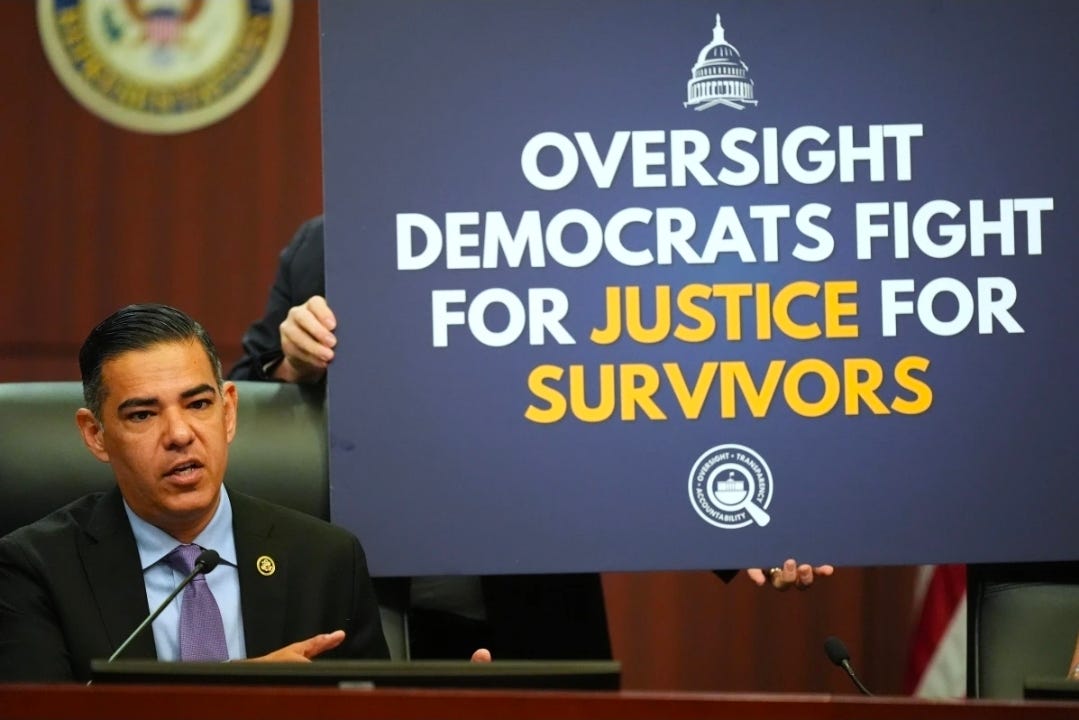
The political lines around Epstein have sometimes shifted in unusual ways. Democrats and Republicans have joined at points to issue subpoenas and demand witness testimony, driven by public pressure and the size of the unanswered questions. That bipartisan movement matters, but it should not be mistaken for justice. A committee can issue subpoenas, schedule interviews, and announce new testimony while still leaving survivors without a clear account of government failure. The danger is that the machinery of investigation becomes a substitute for accountability.
The contrast with Europe sharpens that failure. In several European countries, senior figures have been forced from positions after scrutiny over their ties to Epstein. In the United States, where Epstein operated, where survivors were abused, and where law enforcement failures protected him for years, the reckoning has been far weaker. Some academic and business figures have lost positions, and major institutions have reached multimillion-dollar settlements with women who accused them of facilitating Epstein’s sex-trafficking operations. But settlements and resignations are not the same as a public accounting of how the network survived, who enabled it, and why the American justice system still cannot fully answer for itself.
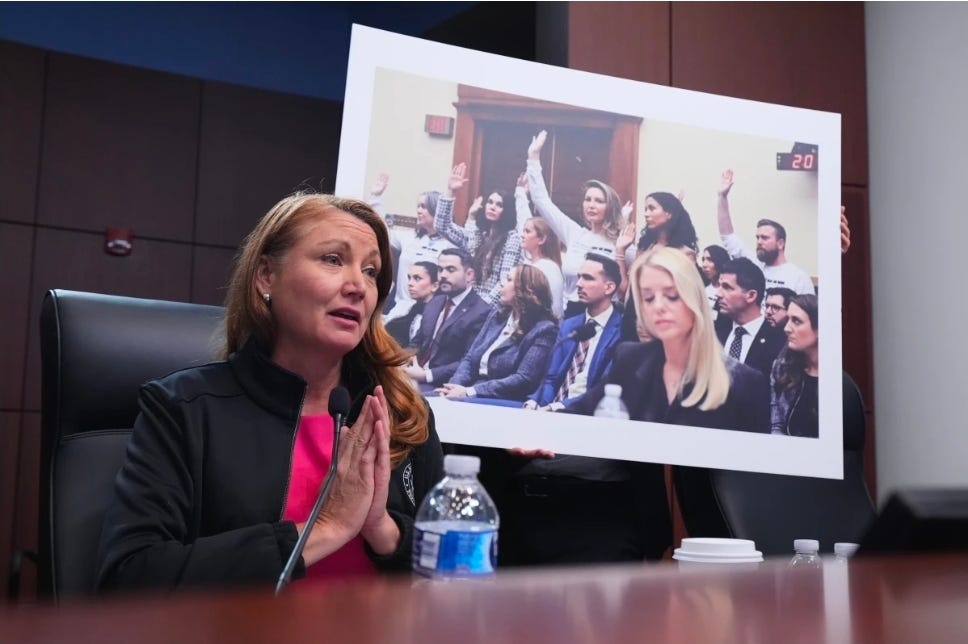
Rep. Melanie Stansbury named the contradiction clearly when she pointed out that a prince has been taken down while the U.S. Department of Justice continues withholding files. Her conclusion was blunt: that is not a failure, it is a choice. That line belongs in the article because it captures the accountability frame without turning the story into theater. Survivors are not watching a passive system stumble. They are watching powerful institutions decide what the public can see, what Congress can press, and how much embarrassment the government is willing to absorb before it closes ranks.
The administration’s handling of Ghislaine Maxwell adds to that wound. Survivors and Democratic lawmakers criticized the decision to move Maxwell, Epstein’s longtime confidant and former girlfriend, to a minimum-security prison camp while she serves a 20-year sentence for luring teenage girls for Epstein to abuse. That decision lands inside a wider pattern where survivors see powerful figures and people connected to the network treated with a level of institutional care they themselves were never given. The message is brutal: the system can be precise when managing the comfort, privacy, or exposure of powerful people, but careless when handling the people they harmed.
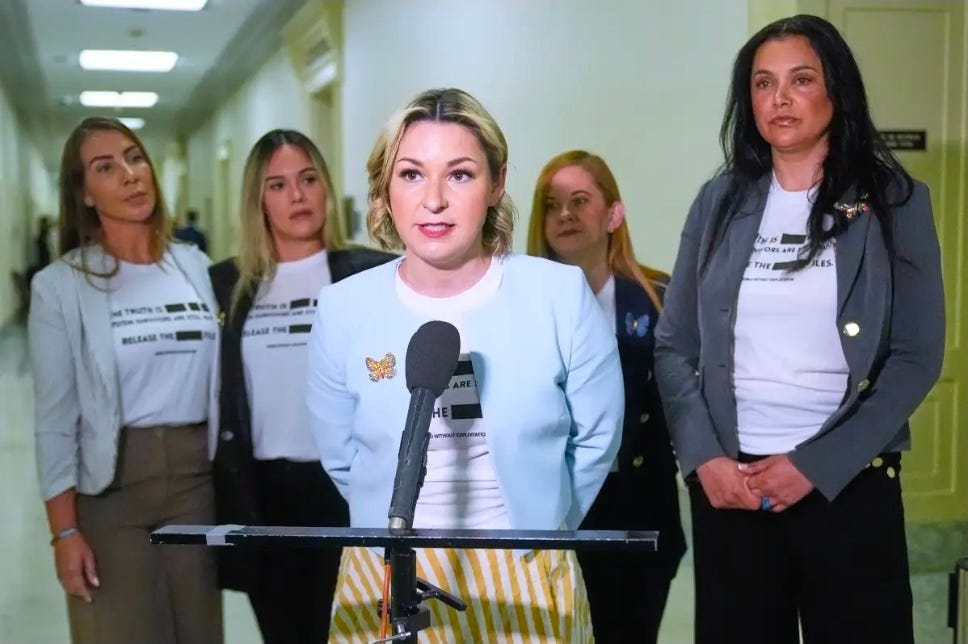
Marina Lacerda’s words show the generational stakes of the fight. She said accountability is hard right now, but survivors are looking toward saving the next generation. That is what makes this story larger than Epstein alone. The question is whether the government can prove that wealth, access, and political proximity will not be allowed to bury sexual abuse in paperwork and delay. The survivors are demanding more than a historical review. They are demanding a line that protects the next person from being handed to the same machinery.
Jena-Lisa Jones, who told lawmakers she was 14 when Epstein abused her in Palm Beach, asked Congress to find a way to bring closure to the story so survivors and the country can move forward. That plea should not be read as exhaustion with public attention alone. It is exhaustion with attention that never becomes accountability. Survivors have been forced to say the names, describe the harm, return to the cities, sit before lawmakers, and relive the record while powerful people continue to move through interviews without the same cost.
That is the core of the Epstein Files Resistance frame: process is not justice unless it breaks the protection system open. A deposition is not justice. A subpoena is not justice. A file release is not justice when it exposes victims while preserving unanswered questions around power. Justice requires acknowledgment of government failure, a serious accounting of the people and institutions that enabled Epstein, and a public record that does not treat survivors as supporting evidence in someone else’s political fight.
Washington has now questioned former presidents, former attorneys general, Cabinet officials, financiers, lawyers, and people who lived close to the Epstein system. Survivors have done their part again and again. They have testified, traveled, organized, demanded, and endured the public reopening of wounds that should never have been theirs to carry alone. The failure is no longer a lack of material. The failure is the refusal to turn material into accountability.
The Epstein record is not closed because survivors are still waiting for the government to name its own failures honestly. It is not closed because the files remain contested, the powerful remain protected by denial and distance, and the country still does not have a full public account of how Epstein’s abuse was allowed to continue after law enforcement already had reason to know. It is not closed because justice cannot be reduced to hearings where officials defend the system and survivors are left asking why acknowledgment still feels out of reach.
The Epstein files are not just a political fight over documents. They are a record of survivors being forced to return, again and again, to the same institutions that failed to protect them the first time.
Epstein Files Resistance exists to keep that record open. This work follows the files, the hearings, the names, the institutional failures, and the survivor testimony that powerful people would rather bury under process, delay, and controlled disclosure.
Survivors do not owe the government endless patience. The public does not owe powerful people silence. If Washington can question presidents, attorneys general, billionaires, bankers, lawyers, and cabinet officials, then Washington can also tell the truth about what failed, who was protected, and why accountability still has not reached the people survivors have been naming for years.
Support survivor-centered Epstein accountability reporting, public-record review, and the demand for full acknowledgment.
Upgrade to support Epstein Files Resistance.
Injustice.