

Before Jeffrey Epstein was arrested, he was invited.
Before the flight logs were dissected, the guest lists were known.
Before court documents were unsealed, the aesthetic was already everywhere.
We did not wake up one morning and suddenly discover that powerful men were sexually exploiting minors. We lived for decades inside a culture that conditioned desire in a specific direction — toward youth, toward the erasure of age, toward the flattening of adult femininity into something smoother, smaller, more adolescent. The shock came late. The architecture was already built.
Epstein did not exploit a cultural blind spot. He operated inside a fully monetized aesthetic ecosystem
This was not a moral accident. It was a market.
What markets reward, culture normalizes. What culture normalizes, institutions protect. The aesthetic did not drift younger by accident; it was engineered through campaigns, castings, editorials, and runway hierarchies that steadily compressed visible adulthood into adolescence. That compression created demand. Demand created profit. Profit created protection.
The Profitable Aesthetic
In 1999, a seventeen-year-old Britney Spears posed for Rolling Stone in lingerie, styled in a childlike bedroom setting with a stuffed toy nearby. The image was distributed globally. It was discussed as edgy, daring, emblematic of female agency. The industry framed it as empowerment. What it demonstrated was how easily adolescence could be repackaged as adult fantasy and sold without consequence.

This was not an isolated editorial decision. It was a signal. When adolescence can be stylized, sexualized, and sold at global scale without industry rupture, it establishes precedent. Precedent becomes template. Template becomes expectation. And expectation quietly recalibrates the market toward younger and younger bodies as aspirational norm.
A decade earlier, Brooke Shields, at fifteen, delivered the now infamous Calvin Klein line: “Nothing comes between me and my Calvins.” The campaign aired nationally. It was celebrated. The brand did not collapse. The executives did not disappear. There was no structural reckoning because there was no structural resistance. This was not scandal. It was strategy.
Strategy works because repetition dulls resistance. When an image appears once, it shocks. When it appears again, it debates. When it appears repeatedly across brands, editorials, and runways, it settles into background culture. What was once provocative becomes conventional. What was once questioned becomes standard casting.
Normalization is not loud. It is cumulative.
And cumulative exposure reshapes perception. The eye adjusts. The benchmark shifts. Adult womanhood becomes visually excessive; adolescence becomes visually ideal. By the time the public recognizes the distortion, the aesthetic has already been institutionalized.
Institutionalization does not remain abstract. It produces environments.
It produces rooms where youth-coded desirability is not controversial but ambient. It produces industries where proximity to power and proximity to adolescence circulate in the same social air. It produces networks that do not perceive themselves as deviant — because the culture around them has already normalized the aesthetic logic they inhabit.
The Ecosystem Epstein Moved Through
Jeffrey Epstein did not invent the obsession with youth. He entered a market that had already perfected it.
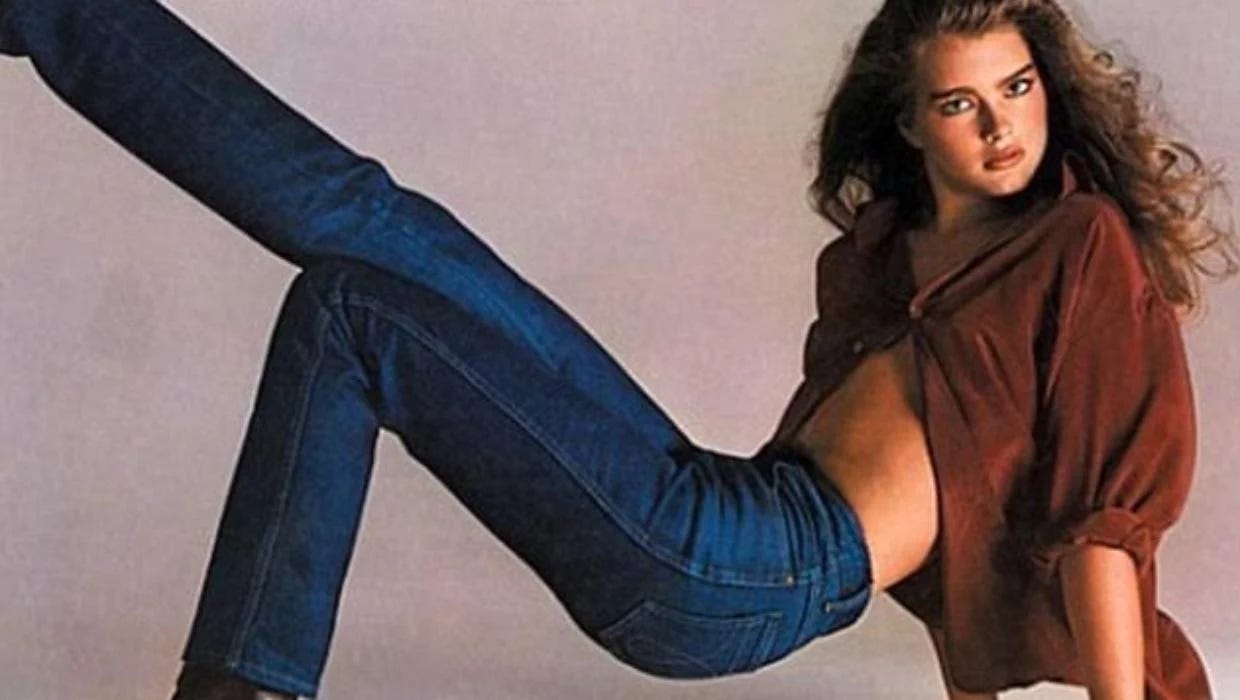
Normalization does not arrive loudly. It accumulates.
First adolescence is sexualized. Then visible adulthood is erased. Then aging becomes failure. Then thinness becomes discipline. Then hairlessness becomes purity. Then curves become excess. Then youth becomes synonymous with value. By the time victims speak, the culture has already rehearsed the logic that made their exploitation profitable.
That is how grooming functions at scale.
Market Design, Not Organic Taste
When fourteen-year-old models walked Milan Fashion Week for luxury brands targeting adult buyers with disposable income, the imagery was not about fabric. It was about hierarchy. The bodies on the runway were not representative of adult consumers; they were adolescent silhouettes positioned as aspirational adulthood

Adult women were not meant to see themselves in those images. They were meant to feel insufficient beside them.
When hairlessness is framed as purity, extreme thinness as discipline, the absence of wrinkles as value, and youth as desirability, that is not neutral styling. It is incentive alignment. Markets reward what demand desires. Media amplifies what markets reward. Institutions protect what media normalizes.
This feedback loop does not require conspiracy. It requires profit.
Jeffrey Epstein did not invent the obsession with youth. He operated within it. He moved comfortably through elite academic institutions, financial circles, philanthropic boards, and media networks. He socialized among men whose industries benefited from youth-coded aesthetics. He existed in rooms where adolescent desirability was not taboo but currency.

To pretend there is no cultural overlap between industries that fetishized youth and men who abused it is intellectually dishonest. This is ecosystem behavior. Predatory demand shapes markets. Markets reinforce desire. Media normalizes it. Institutions protect profitability.
Epstein did not build a network in a moral vacuum. He built it inside a culture that already equated youth with value and softened the ethical edges of that equation.
The Generational Shift
Look backward for contrast. In the 1980s and early 1990s, actresses in their thirties looked thirty. Women in their forties looked forty. Models resembled adults. Age was visible. It was not airbrushed into nonexistence.
Now consider the present: fillers at twenty-two, Botox before the first wrinkle, pharmaceutical thinness marketed as wellness, filters that erase bone structure, luxury campaigns populated by teenage faces. The aesthetic moved younger while executive power aged upward.

When the pandemic disrupted beauty routines, something revealing occurred. Women gained weight. They wore less makeup. They showed texture. They existed without constant performance. The aesthetics industry recalibrated quickly. Extreme thinness returned. Youth flooded campaigns again. The panic was economic, not ethical.
Adult women with self-sovereignty are less predictable consumers. Youth-coded bodies are scalable assets.
That distinction matters.
Cultural Cover
When media saturates culture with adolescent-coded desirability, it blurs the boundary between preference and pathology. It makes predatory fixation feel culturally adjacent rather than criminally aberrant. It provides camouflage.
If the dominant beauty standard already privileges youth, then the man who prefers youth does not appear deviant. He appears aligned. He appears culturally consistent. He appears disturbingly ordinary.
That alignment is protective.
The Files Are Structural
The Epstein files are not only about individual crimes. They are evidence of protection networks. They reveal institutional shielding, social insulation, and financial overlap. They expose who traveled, who socialized, who remained silent.
They also expose cultural complicity — between media profit and fashion aesthetics, between elite social circles and youth fetishization, between institutional silence and market incentive.
Silence is structural.
If we investigate crimes while refusing to interrogate the culture that normalized the demand, the investigation remains incomplete. If we expose names while protecting industries, we are not serious. If we unseal documents while leaving the aesthetic machinery intact, we are not serious.
The system is not embarrassed. It is intact.
The question is not whether predators exist.
The question is who built the environment that made them comfortable — and who continues to profit from it.
Until that question is pursued with equal intensity, exposure remains containment.
EPSTEIN FILES RESISTANCE
Epstein Files Resistance documents institutional shielding, financial overlap, and cultural normalization tied to exploitation networks.
This publication follows structure, not spectacle.
Systems, not headlines.
Architecture, not outrage cycles.
If culture was engineered, it can be examined.
If it can be examined, it can be dismantled.
Sustained scrutiny requires sustained support.
Subscribe — Investigate the Files
Great analysis. As someone involved in fashion in my younger years I can honestly say that the brain washing works exactly as intended. I didn't have the exposure to internet and global television because it didn't exist but it didn't have to go that far. The fashion magazines set the standard and WE enforced it. We shamed those that didn't conform and elevated those who did. The thought never crossed our minds that we were being objectified, and the dissonance between puberty and Twiggy never hit home. Education encouraged it, society revelled in it and people who wonder how we got here are still not paying attention.
Great timing. With all of the attention toward fashion, I have wanted to look back at some of the ad campaigns that honestly bothered me at the time. Now I can see that I was not over dramatic, and many were modeled after porn shoots. I remember one campaign where boys were dressed as street trade, and proud of it.